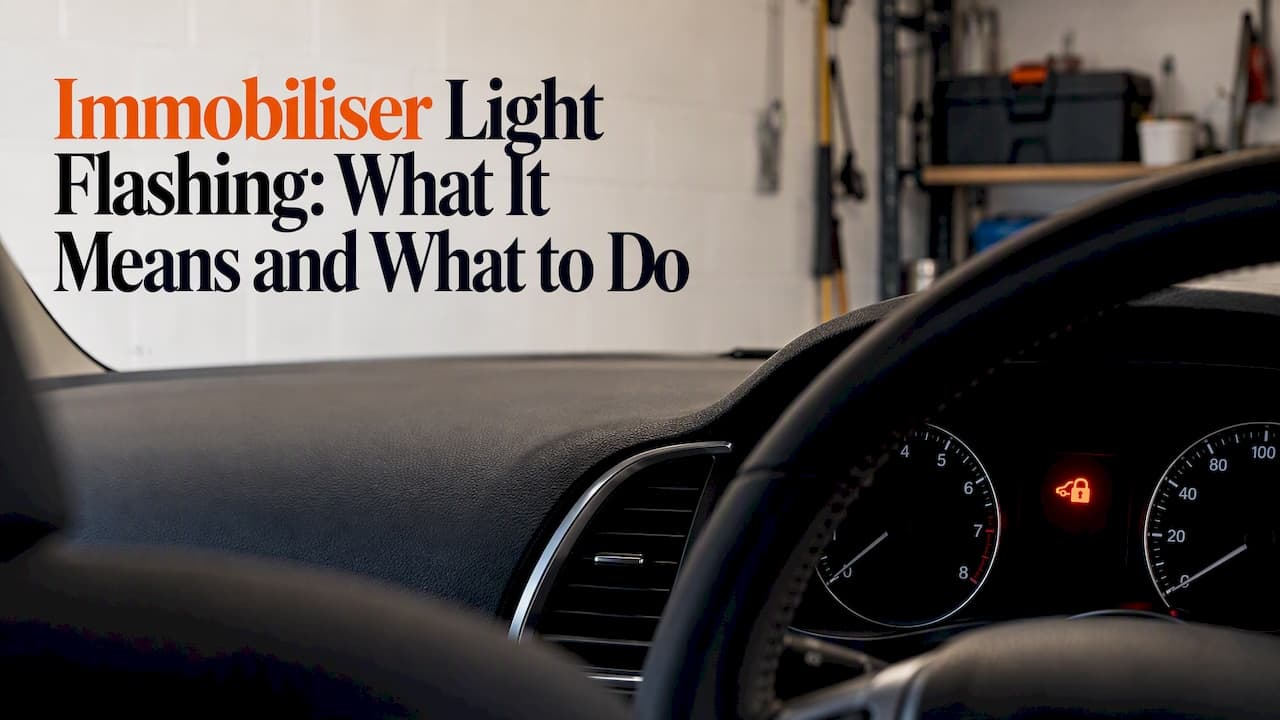
A slow blink while your car is parked and locked is normal: it is the anti-theft system telling would-be thieves it is armed. A flashing or solid light when you are trying to start the engine is different. It usually means the car cannot recognise your key. Below, we explain how to tell the two apart, what to check first, what not to do, and when a mobile locksmith can fix it on your driveway.
TL;DR
- A slow, regular blink with the car off and locked is a normal part of the anti-theft system, not a fault.
- A fast flash or solid light when you turn the key, with a car that will not start, points to a key-recognition failure: a weak fob battery, a damaged transponder chip, or a fault in the car.
- Try the spare key first. If it starts the car, the main key is the problem. If neither works, the fault is probably in the vehicle.
- Do not keep cranking the engine, and do not rely on a battery-disconnect "reset". Both can make things worse.
- If the light is still flashing after the simple checks, we can diagnose and fix it on site in Essex and Hertfordshire, usually without a tow.
Table of Contents
- Is a flashing immobiliser light normal?
- What the system is actually doing
- Common reasons the light flashes and the car will not start
- What to try, in order
- The "start-then-die" symptom
- What not to do
- When the key is the problem
- When the car is the problem
- Mobile locksmith or dealer?
- Choosing a locksmith you can trust
- Our perspective: why we start with the spare key
- How we can help in Essex and Hertfordshire
- FAQ
- Sources
Is a flashing immobiliser light normal?
Often, yes. Most cars with an engine immobiliser blink a small light on the dashboard (a padlock, a key outline, a car with a key, or a plain red dot) while the ignition is off. That slow blink is the system advertising itself to anyone looking through the window. It tells you the car is armed and monitoring.
The pattern matters more than the light itself:
| What you see | Car state | What it usually means |
|---|---|---|
| Slow, even blink every few seconds | Parked, locked, key away | Normal. System is armed |
| Light comes on for a moment, then goes out | Ignition on, key in or detected | Normal. Key has been recognised |
| Fast flashing or solid light | You are trying to start | Key not recognised, or fault in the system |
| Flashing plus engine cranks then dies | Starting attempt | Classic immobiliser cut-out |
| Light blinking at an odd rate, or the alarm sounds | Parked | Possible alarm trigger, weak fob battery or a fault |
If you have just noticed the blink and the car starts perfectly, you can relax. Many drivers only spot it when they walk away from the car at night. The UK Home Office has noted that most people do not even know their car has an electronic immobiliser, which is exactly why a harmless blink causes so much worry.
What the system is actually doing
An immobiliser is simple in principle. Your key contains a small transponder chip. When you turn the key or press the start button, an antenna (often a ring around the ignition barrel, or sensors in the cabin for keyless cars) reads the chip. The engine control unit (ECU) checks the code. If it matches, fuel and ignition are allowed. If it does not, the engine is blocked.
When that check fails, the car cannot verify the transponder and stops the ignition, fuel or starter from engaging. That is why the light flashes and the car refuses to run, even though the battery, fuel and starter may all be perfectly healthy.
The Home Office research is a useful reminder of why this design exists. Immobilisers work because they operate automatically and need no action from the driver. The flip side is that when they fail, the car gives you very little to go on except a light.

Common reasons the light flashes and the car will not start
A weak or dead key fob battery
This is the cheapest cause and the first one to rule out. Many modern keys depend on a small battery to send a signal, and a fob battery swap is a low-cost fix worth trying first. Warning signs include reduced remote range, the buttons needing several presses, or a "key battery low" message on the dash.
If your problem looks more like a fob that will not lock or unlock the car, our guide on fixing a key fob in three quick checks walks through it.
A damaged or degraded transponder chip
Keys get dropped, sat on, washed, and left in hot cars. The chip inside can crack or lose its link with the car. The key still turns and the remote may still work, but the car no longer accepts the code. If the spare key starts the car and the main one does not, this is the likely culprit. We cover it in more depth in our piece on what to do when a transponder key is not working.
A faulty antenna ring or wiring
If no key works, including a spare you know is good, the fault is probably in the car. Common causes include a faulty antenna ring around the ignition barrel, or a communication failure between the ECU and the immobiliser system. This needs proper diagnosis with the right equipment rather than guesswork.
A flat or replaced car battery
Some vehicles, especially push-button start models, can show a flashing immobiliser light and refuse to start after the 12-volt battery has been replaced or has gone flat. Foxwell notes this happens on some keyless cars because of a temporary loss of communication. If the problem began right after a battery change or a jump start, tell whoever diagnoses it.
A key that is not programmed to the car
A cut key that looks identical is not enough. A new key must have its chip coded to the car's ECU. A badly copied key, a cheap online blank, or a key from a different vehicle will turn in the lock yet fail the immobiliser check.
Keyless systems that cannot find the key
On smart-key cars, interference, a weak fob battery or a faulty receiver can leave the car unable to detect the key. Our article on a smart key not detected covers the five checks to run before you call for recovery.
What to try, in order
Work through these steps calmly. Each one is quick, and none can harm the car.
- Check the light pattern. Is the car actually refusing to start, or is it just blinking while parked? If it starts, nothing is wrong.
- Try the spare key. This is the single most useful test. If the spare works, the fault is likely in the main key's transponder. If neither works, suspect the car.
- Change the fob battery. Check the battery type printed inside the fob (often a CR2032, but it varies), and replace it carefully.
- Remove clutter from the key ring. Other fobs, cards and metal tags can interfere with the signal on some cars. Try the key on its own.
- Hold the key close to the start button or ignition. On many keyless cars the manual explains a backup position where the car can read a flat fob. Kia's owner manual is one example of how makers describe the smart key immobiliser. Check your own handbook for the exact method.
- Wait before trying again if the car has locked out. More on that below.
If you have done all of this and the light is still flashing, stop and get the car checked.
The "start-then-die" symptom
One pattern deserves a mention. If the engine cranks normally, fires, and then cuts out within one to three seconds, that points strongly at the immobiliser rather than a fuel or spark problem. The engine is getting what it needs, but the immobiliser module shuts it down because it could not verify the key in time. This is useful information to give whoever looks at the car, because it saves time chasing the wrong fault.
What not to do
Do not keep cranking
Repeated attempts feel natural, but they can backfire. Many vehicles will enter a temporary lockout or security cool-down after several failed attempts, which can last 10 to 15 minutes. During that time the car will not start even if you have fixed the underlying fault, such as fitting a fresh fob battery. Leave it for the full period, then try once.
Repeated cranking also drains the battery, which can add a second problem on top of the first.
Do not rely on disconnecting the battery
You will see advice online to disconnect the battery to "reset" the immobiliser. On modern cars it rarely works. Security data is typically held in non-volatile memory, so a hard reset often does nothing and can sometimes cause synchronisation problems with the ECU. A proper diagnostic read is more reliable.
The same applies to the many "immobiliser reset" tricks passed around forums. Some older models do have a documented key-cycle relearn procedure in the handbook, and it is fair to try what the manufacturer lists for your exact car. Beyond that, a reset only helps if the fault was a momentary glitch. If the key, antenna or module is at fault, nothing you do at the ignition will fix it.
Do not bypass or disable the system
Removing the immobiliser to get a car running leaves it easier to steal and may affect your insurance. If a fault has been found, repair it properly.
When the key is the problem
If the spare works and the main key does not, the usual fix is a new key, or a repair and reprogramming of the existing one. A mobile auto locksmith can cut and code a replacement at your location. Many drivers do not realise this, and book a tow to a main dealer instead. Our guide on whether a locksmith can make a car key sets out what is usually possible on site and what to check beforehand.
If you have lost every key, the job is bigger but still often doable in one visit. We describe the process in eight technician steps for all keys lost programming. Some makes have their own quirks, such as Audi key programming and Toyota key programming.
If a key has been stolen along with other items, ask about deleting the old key from the car's memory and programming new ones, so the missing key can never start the car.
When the car is the problem
If no key works, the issue sits in the car: the antenna ring, wiring, the immobiliser module or the ECU. This is where diagnostic tools matter. A scan can show whether the car is seeing the key at all, and which part of the chain is failing. Ignition barrel wear can also play a part, and worn locks and ignitions can be repaired or replaced.
If your car has had an aftermarket immobiliser or tracker fitted, mention it as well. A badly fitted add-on can interfere with the original system, and it is worth reading the checks to make when fitting a CAN bus immobiliser so you know what a correct installation looks like.
Mobile locksmith or dealer?
Both can solve an immobiliser fault. The difference is mostly logistics.
| Mobile locksmith | Dealer or recovery to workshop | |
|---|---|---|
| Where the work happens | At your home, work or roadside | At the workshop, so the car must be moved |
| Towing | Usually not needed | Often needed if the car will not start |
| Typical wait | Often under an hour on site once on the job | Depends on workshop booking and parts |
| Key supply | Cut and coded on the spot for most vehicles | Often ordered in |
| Best for | Key faults, lost keys, spares | Complex module faults needing manufacturer work |
For key-related faults, which are the majority, a mobile visit saves the tow and the wait. For a failed ECU or a major wiring fault, a workshop may be the right place. A good locksmith will tell you honestly which situation you are in.
Choosing a locksmith you can trust
You are handing someone the ability to program keys to your car, so it matters who does it. The Crown Prosecution Service has reported on gangs of professional car thieves who used key programming devices to steal keyless vehicles. The lesson for owners is to use a technician who is licensed, insured and works to proper security protocols, and who will ask for proof of ownership.
A few things to ask before you book:
- Are you insured, and can you show it?
- Are you SERMI-certified? The scheme governs access to vehicle security functions, and it is going live in the UK.
- Will you check my ID and proof of ownership before programming a key?
- Do you quote a price before you travel?
All of our technicians are licensed, insured and SERMI-certified.
Our perspective: why we start with the spare key
We get this call most weeks. Someone is standing next to a car that was fine yesterday, a light is flashing, and they have already tried the key a dozen times. The first thing we ask is whether there is a spare, because that one answer cuts the problem in half.

What we see is that people assume the worst, a dead ECU and a huge dealer bill, when the cause is often much closer to the key. The reverse also happens: someone changes a fob battery, nothing improves, and they keep trying when the car needs a proper diagnostic read. Our vans carry diagnostic tools so we can find out which it is, on your drive, rather than guess.
Our advice is simple. Do the free checks. Leave the car alone for 15 minutes if it has been cranked repeatedly. Do not buy a blank key online and hope for the best, because it still needs coding to your car. And if you have lost your only key, call before you try anything else, because the sooner a technician can read the car, the more options you have.
— James
How we can help in Essex and Hertfordshire
We are a mobile auto locksmith covering areas including Harlow, Chelmsford, Brentwood, Epping, Bishop's Stortford, Braintree, Loughton and Great Dunmow. We bring the equipment to you, so there is no need to tow the car to a dealer. Jobs are typically done on site within 30 to 60 minutes.
What that looks like in practice:
- Key programming, from £120, for new, spare and replacement keys that need coding to your car.
- Ford keys: a standard key from £120 and a remote key from £150.
- Lock and ignition repair, from £120, when the fault is in the car rather than the key.
- Emergency service, with a callout fee from £120, when you are stranded.
We also deal with all keys lost jobs, stolen key deletion and reprogramming, key fob repair and van keys. The full list is on our services page. Prices depend on the make and model, so the figures above are starting points. For anything without a published price, we will give you a quote before we travel.
FAQ
Why is my immobiliser light flashing but the car won't start?
The car is not recognising the key's transponder, or something in the chain between key, antenna and ECU has failed. Start with the spare key and a fresh fob battery. If neither helps, the fault is probably in the car and needs a diagnostic read.
Is it normal for the immobiliser light to blink when the car is off?
Yes. A slow, regular blink while the car is locked and parked shows the anti-theft system is armed. It is worth worrying only if the pattern changes, the alarm sounds, or the car will not start.
How do I reset my immobiliser?
First, wait 10 to 15 minutes if you have cranked the engine several times, as the car may be in a temporary lockout. Then try a fresh fob battery and the spare key. Disconnecting the car battery often does nothing on modern cars, so if the light keeps flashing, get it diagnosed.
Is an immobiliser problem an easy fix?
Sometimes. A flat fob battery takes minutes. A damaged transponder means a repaired or new key, which a mobile locksmith can usually supply on site. A faulty antenna ring, wiring or module is a bigger job that needs proper diagnosis.
Sources
- Immobiliser or security light flashing, CarGeek
- Immobiliser light on dashboard, Semiatic
- Faulty engine immobiliser? How to solve immobiliser problems, StartRescue
- Reducing criminal opportunity: vehicle security and vehicle crime, Home Office
- How to tell if your car's immobilizer is broken, Top Tier Auto
- What does it mean when the immobilizer light is blinking, ANCEL
- How do you reset an immobilizer, Foxwell
- Smart key immobilizer system, Kia owner's manual
- Gang of professional car thieves jailed, Crown Prosecution Service
- SERMI UK update, Maverick Diagnostics