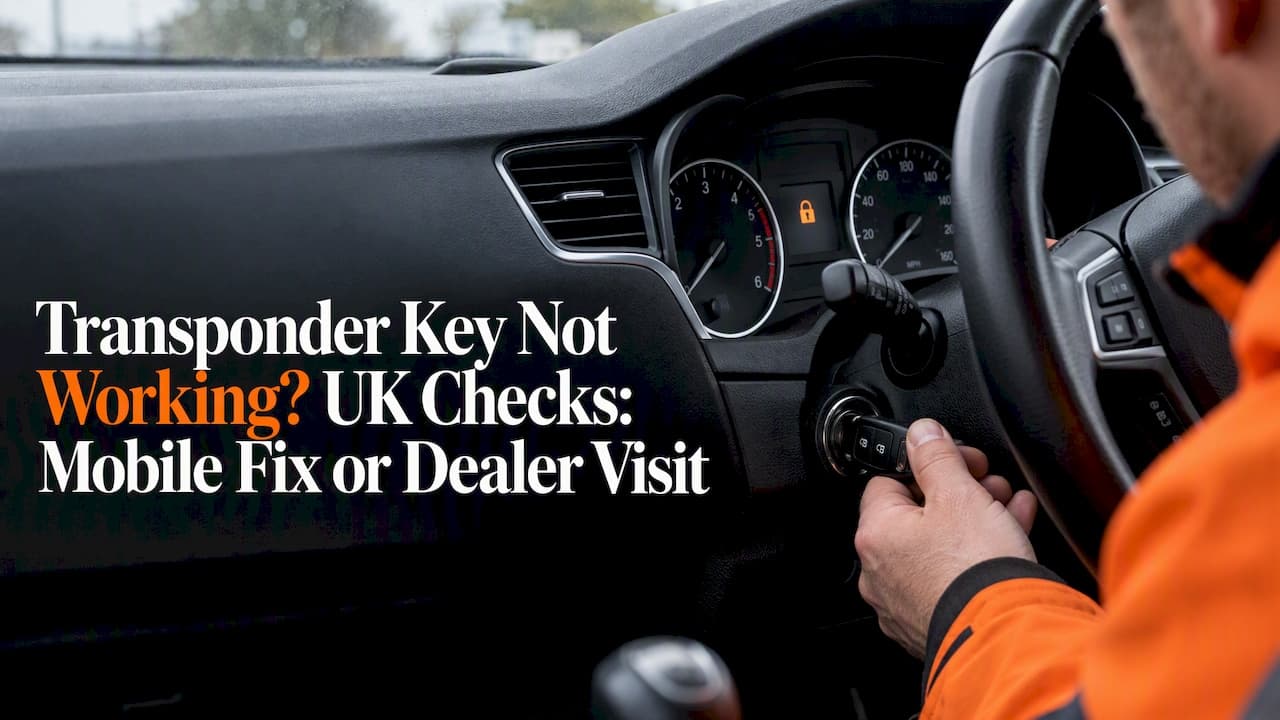
A flat fob battery is the most likely reason your transponder key has stopped working, so try your spare key first, then replace the battery. If both fail, the cause is usually lost programming, a damaged chip or an immobiliser fault. Work through the short checklist below before you call anyone or arrange a tow.
TL;DR:
- Most fobs take a CR2025 or CR2032 coin cell; a weak battery may unlock nearby doors yet fail to start a car with keyless ignition.
- For many push button models, holding the fob against the start button triggers emergency starting; check the handbook for your vehicle’s exact procedure.
- Call a locksmith if both keys fail, you are locked out, or the key is broken; dealer tools may be required for security module faults.
- Roadside key programming starts at £120, though manufacturer procedures may require dealer tools, and an immobiliser or ECU fault can mean a tow.
Table of Contents
- Why has my transponder key stopped working?
- What quick checks can you try safely right now?
- When should you call a locksmith or the dealer?
- How do mobile technicians diagnose these faults on site?
- Why I would always start with the cheapest check
- Need a transponder key fixed or replaced on site?
- FAQ
- Sources
Why has my transponder key stopped working?
Most faults fall into a handful of groups, and the symptoms usually point to the right one. The ALOA consumer guidance names a dead battery as the most frequent issue affecting fob performance.
- Dead or weak battery: most fobs use a CR2025 or CR2032 coin cell. A tired cell can still unlock the doors from close range yet fail to start a push-button car.
- Lost programming or immobiliser mismatch: the car only starts when it reads the correct coded signal, so a key that has lost its pairing is treated as a stranger.
- Damaged chip or circuit board: drops, cracked housings and water damage can disable the chip even when the key looks fine.
- Vehicle-side faults: a receiver, antenna, wiring or control unit problem can make every key fail, including the spare.
- Interference: strong radio signals near the car can block the remote, so the same key may work after you move.
A flat key fob battery is the most common and easiest immobiliser issue to fix, and a replacement should cost only a few pounds, depending on make and model. That makes the battery the cheapest thing to rule out before you suspect anything bigger.
What quick checks can you try safely right now?
Do these in order. Each step either fixes the problem or tells you where the fault sits, which saves a wasted call-out. Skip any soldering or electrical repair on the circuit board: a slip there can turn a cheap fix into a dead key.
- Try a known-working spare key. If it starts the car, the fault is in the original key. If it fails too, suspect the vehicle.
- Replace the fob battery. Prise the case open gently along its seam, note which way the old coin cell sits, fit a fresh CR2025 or CR2032 the same way round and press the halves together.
- Inspect and clean the contacts. Wipe the battery contacts with a little rubbing alcohol, as the ALOA advice suggests. Look for green or white corrosion or signs of water on the board. If you find heavy corrosion on a car battery's terminals while you are checking, this cleaning guide explains the safe method.
- Check the dashboard and try the emergency start. Look for an immobiliser light or a warning message. Many push-button cars start if you hold the fob against the start button, but your owner's handbook gives the exact spot and procedure for your model.
- Test for interference. Move the car or stand closer to it and try again. The AA's guidance notes that remotes work better nearer the vehicle, and that in extreme cases patrols have moved cars away from interference.
Pro Tip: If the remote is dead, use the mechanical key hidden in the fob to open the driver's door, then retry the emergency start rather than forcing anything.
Our short key fob checklist walks through the battery and contact steps if you want a quick reference. If you are stranded after all five steps, call your breakdown provider.
When should you call a locksmith or the dealer?
Call a locksmith when you are locked out, the spare also fails, the key is physically broken, or you need a replacement or reprogramming. The RAC also recommends professional help once battery swaps and reprogramming attempts have run out.
A dealer is more likely to be needed for manufacturer security module problems or procedures that only dealer tools can complete. This comes up more often with some European makes, and the ALOA guidance says some repairs may need dealer intervention.
When a technician arrives, expect these checks:
- The fob battery and electronics.
- The immobiliser light and any fault codes.
- The receiver and antenna.
- Whether the key needs reprogramming or replacing.
On-site programming and cut-and-program work may be possible, depending on the fault and your vehicle. A tow is only likely if the immobiliser or ECU needs dealer attention. Have your make, model, year, VIN and proof of ownership ready before you ring.
How do mobile technicians diagnose these faults on site?
Our technicians follow a set sequence: visual inspection, battery swap, a test with your spare, a look at the immobiliser indicator and dashboard messages, then a scan of the ECU and immobiliser. Only then do we reprogram or replace the key. You can see how this plays out in our write-up of all keys lost programming in one visit.
- A technician may be able to address a flat battery, damaged fob electronics, key cutting or reprogramming at the roadside.
- Some manufacturer security procedures still need dealer tools, and we tell you straight away when that applies.
- Working on site may avoid the need for towing.
Pro Tip: Keep the old key even if it is damaged. A technician can often read or reuse parts of it, which can make programming a replacement quicker.
If the fob itself is the problem, our keyless entry triage guide shows what we check first.
Why I would always start with the cheapest check

People jump to the expensive explanation because a car that will not start feels like a serious fault. In my experience of reading the evidence, the boring answer wins far more often than the dramatic one: a flat coin cell, a worn contact, a key that needs pairing again. That is why I push the order of checks so hard. Spare key, battery, contacts, emergency start, then a new location. It costs almost nothing and removes most of the guesswork.
Resist the urge to open the circuit board or buy a cloned key from an unknown seller. If the quick checks fail, a mobile, insured technician can programme or replace the key where you are, and you will need proof of ownership either way.
— James
Need a transponder key fixed or replaced on site?
If the checks above did not bring your key back to life, contact us to ask whether we can diagnose and fix it at the roadside. Our services include key programming, all keys lost replacements, key fob repair and replacement, lock and ignition repairs and emergency lockouts. No towing, and often no long wait. Key programming starts from £120. Have your vehicle details and proof of ownership to hand, then check availability or book an emergency visit and we will tell you what to expect before we set off.

FAQ
How can I tell if my transponder key is bad?
Try a known-working spare key first. If the spare starts the car and the original does not, the original key is the problem, often a flat battery, a damaged chip or lost programming. If both fail, the fault is more likely on the vehicle side.
How do I reset my car immobiliser?
Procedures vary by make, so check your owner's handbook for the immobiliser and emergency start instructions. If the car still refuses to start, the key may need reprogramming or the immobiliser control unit may need testing by a qualified technician.
How do I fix an unresponsive key fob?
Start with a fresh CR2025 or CR2032 battery and clean the contacts. Then try the remote closer to the car and use the mechanical key to get in. If it stays unresponsive, the fob usually needs reprogramming or replacing.
What happens if your transponder is not working?
The immobiliser allows the vehicle to be driven only when it receives the correct code from the key. If it does not, the car may not start, even though the key may still turn or unlock the doors. Read more about immobilisers. Fixing it means restoring the signal through a new battery, reprogramming or replacing the key or chip.
Sources
- ISSUE WITH YOUR AUTO KEY FOB | ALOA
- Startrescue
- What to do if you've lost your car keys | The AA
- Key fob not working? Here's what to do