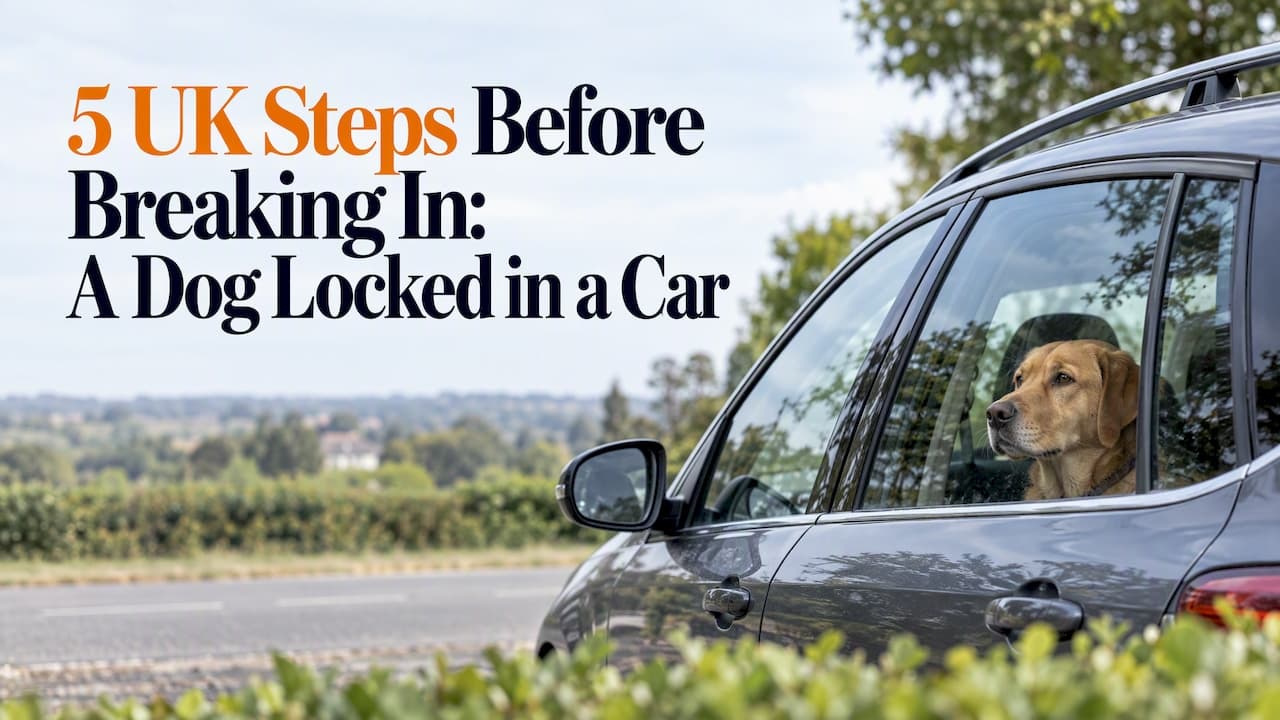
If the dog is panting heavily, drooling, collapsed or confused, call 999 immediately and tell the operator "animal in distress", then stay with the vehicle until help arrives. If the dog looks settled and alert, do not break in: record the time, location and registration, try to find the owner or alert staff nearby, and call the RSPCA or police for advice.
TL;DR:
- Heavy panting, drooling, weakness, confusion, vomiting, or abnormal gum color can signal heatstroke; puppies, older dogs, and short-muzzled or overweight breeds overheat faster.
- A car interior can reach 47°C when outside temperatures are 22°C; shade and cracked windows do little to prevent rapid heating.
- Once out, move the dog to shade, apply water at room temperature gradually, add airflow, offer sips only if alert, and call a vet.
- Forcing entry can amount to criminal damage, and a lawful excuse is not guaranteed; call police first, record the scene, and gather witness details.
Table of Contents
- How to recognise danger: signs a dog is in life-threatening distress
- Immediate on-scene actions: call, alert, record and monitor
- First aid on scene: how to cool a dog safely before transport
- Legal risks and how to protect yourself if you consider forcing entry
- If the dog seems OK: monitor, gather evidence and escalate if needed
- Author perspective and practical handover notes
- What this situation really tests
- How Auto Key Maker can help once the dog is safe
- FAQ
- Sources
How to recognise danger: signs a dog is in life-threatening distress
Heatstroke in dogs develops fast, sometimes within minutes, and the warning signs are distinct enough to act on immediately. According to RSPCA guidance on recognising and treating heatstroke, the symptoms include:
- Heavy, laboured panting or excessive drooling
- Lethargy, weakness or sudden collapse
- Confusion, disorientation or unresponsiveness
- Vomiting or diarrhoea
- Bright red or pale gums
Short-nosed breeds such as French Bulldogs and Pugs, along with older, very young, overweight or thick-coated dogs, overheat faster than others and need help sooner.
A car heats up far quicker than most people expect. Warwickshire Police report that a car's interior can reach around 47°C when it is just 22°C outside, meaning a mild spring day is enough to put a dog at serious risk. Shade shifts as the sun moves, and a cracked window makes almost no difference to how quickly the inside of a car heats up, a point Blue Cross also stresses when addressing the common belief that parking in shade is enough. If you see any of these signs, treat it as an emergency rather than waiting to see if the dog improves.
Immediate on-scene actions: call, alert, record and monitor
Acting in the right order protects the dog and protects you if the situation escalates. Follow these steps as soon as you find a dog locked in a car:
- Call 999 straight away if the dog shows any sign of distress; tell the operator it is an animal welfare emergency.
- Call 101 for police advice when the dog does not appear to be in immediate danger, or call the RSPCA cruelty line on 0300 1234 999 for guidance.
- Ask nearby staff to make a tannoy announcement or page the owner if you are at a shop, car park or venue.
- Note the exact time, location and vehicle registration, and check for a parking ticket or receipt on the dashboard to estimate how long the dog has been left.
- Photograph or film the dog and the car, and get the names and phone numbers of any witnesses nearby.
These records matter even if the dog turns out to be fine, because they establish exactly what you saw and when.
Pro Tip: Save the time you arrived as a note on your phone the moment you see the dog, so you have an accurate record even if things move quickly afterwards.
First aid on scene: how to cool a dog safely before transport

The core rule from vets and welfare charities is cool first, transport second. Moving an overheated dog too soon, especially in a warm car, can push its body temperature higher and worsen shock, a risk veterinary guidance on heatstroke management specifically warns against when cooling is rushed or uncontrolled.
Once the dog is out of the vehicle and somewhere shaded or ventilated, RSPCA first-aid advice recommends:
- Pour small amounts of room-temperature water onto the neck, chest, belly and thighs, repeating gradually rather than dousing all at once
- Lay wet towels over the dog and direct airflow from a fan or open door towards it
- Offer small sips of water if the dog is alert enough to drink
- Avoid ice-cold water and avoid wrapping the dog in towels, since both can trap heat and increase the risk of shock
Body temperature can keep rising even after a dog is moved into shade, which is why gradual, repeated cooling matters more than a single dramatic action. Call a vet as soon as you start cooling so they can prepare for your arrival and tell you whether to keep cooling en route or stop once symptoms ease.
Legal risks and how to protect yourself if you consider forcing entry
Dog owners carry a legal duty of care under the Animal Welfare Act 2006, and leaving a dog in conditions that cause it to suffer can lead to prosecution. That law protects the dog, but it does not automatically give a bystander the right to smash a window.
Breaking into someone else's vehicle is criminal damage unless you have a lawful excuse. The Criminal Damage Act 1971, section 5, allows a defence where you honestly believed immediate action was necessary to protect the dog and that the owner would have consented if they had known. Police guidance on dogs in hot cars advises against forcing entry as a first response, and sets out what to do if police cannot attend in time and you decide to act:
- Call 999 or 101 first and tell the operator what you intend to do before acting
- Photograph or film the dog's condition and the vehicle before and after you intervene
- Collect the names and phone numbers of witnesses who saw the dog's condition
- Be prepared to explain in court why you believed the action was necessary at that moment
These steps do not guarantee a defence, but they build the evidence a lawful-excuse argument depends on.
If the dog seems OK: monitor, gather evidence and escalate if needed
A dog that looks settled still needs checking on, because conditions can change quickly as the sun moves or the car heats further.
- Look for a parking ticket, pay-and-display receipt or shop timestamp to work out roughly how long the dog has been alone.
- Stay nearby or ask someone to, and recheck every few minutes for any change in the dog's breathing or behaviour.
- Call 101 or the RSPCA cruelty line if the owner has not returned within a reasonable time or the dog's condition changes.
- When the owner returns, raise it calmly and factually rather than confrontationally, since most owners will not have realised how hot the car had become.
If the dog deteriorated during your wait, report it to police or the RSPCA afterwards using the evidence you gathered, even once the immediate danger has passed.
Author perspective and practical handover notes
Most of these incidents end with a nervous bystander and a confused owner, not a genuine emergency, but the few minutes before you know which one you are dealing with are the minutes that matter. Documenting the scene costs you nothing and protects you either way. Once the dog is safely out, access problems such as a locked car with keys inside sometimes remain, and a mobile locksmith such as Auto Key Maker can attend to restore access without further damage to the vehicle.
What this situation really tests
The hardest part of finding a dog locked in a car is rarely the first aid, it is the fifteen seconds of hesitation before you decide whether to call 999 or wait and watch. Conventional advice tends to focus heavily on the legal risk of breaking a window, which matters, but it can make people too cautious about the one action that costs nothing and carries no legal risk at all: calling for help immediately. A 999 call does not commit you to smashing anything. It gets a trained responder on the way while you keep assessing.
The second thing people underestimate is how ordinary these incidents usually turn out to be. Most dogs found in parked cars are not yet in danger, and the owner is often back within minutes. That does not mean ignore it, it means the priority order is assess, call, document, and only then consider forcing entry if police cannot attend and the dog is visibly deteriorating. Get that order right and the legal and welfare outcomes tend to take care of themselves.
— James
How Auto Key Maker can help once the dog is safe
The dog's welfare always comes first: call 999 for distress, or 101 and the RSPCA for advice, before anything else. Once the dog is safely out and the situation is under control, some incidents leave an owner locked out of their own vehicle, whether a window was broken, keys were left inside, or an ignition was damaged during a rescue.
That is where our mobile locksmith service across Essex and Hertfordshire comes in:
- We attend on site, typically within 30 to 60 minutes, so there is no need to wait for a tow truck
- Our non-destructive lockout service gets owners back into their car without further damage, from £120
- We handle on-site key programming and lock or ignition repairs, also from £120, if a window or lock was damaged during the incident
- Our technicians are licensed, insured and equipped for most makes and models

If you or someone nearby is dealing with a locked or damaged vehicle after an animal welfare incident, check availability for our emergency callout service and we will get a technician on the way.
This article is general information, not a substitute for advice from a qualified lawyer. Consult a qualified legal professional about your own circumstances before acting on anything here.
FAQ
What do I do if a dog is locked in a car?
Check the dog for signs of distress such as heavy panting, drooling or collapse. If you see any of these, call 999 immediately; if the dog looks settled, record the time and registration, try to locate the owner, and call the RSPCA or police on 101 for advice.
Is it safe to leave a dog in a hot car?
No. A car's interior can reach around 47°C when it is only 22°C outside, according to Warwickshire Police, and shade or an open window does little to slow that rise. Even a short stop can put a dog at risk of heatstroke.
What are the new dog laws in 2026?
There is no new dog-specific legislation covering hot cars; the relevant framework remains the Animal Welfare Act 2006, which sets out an owner's duty of care, alongside the Criminal Damage Act 1971 for anyone considering forcing entry. Check these primary sources or the RSPCA for the current position before acting.
What words do dogs love to hear the most?
This is not something the research behind this guide addresses, since the focus here is on emergency safety rather than general dog behaviour. For calming a stressed dog during a rescue, a steady, quiet voice generally matters more than any specific word.
Sources
- How to recognise & treat heatstroke in dogs - RSPCA
- Animal Welfare Act 2006
- Q21: There is a dog in a vehicle that appears hot and distressed, what should I do? — Ask the Police