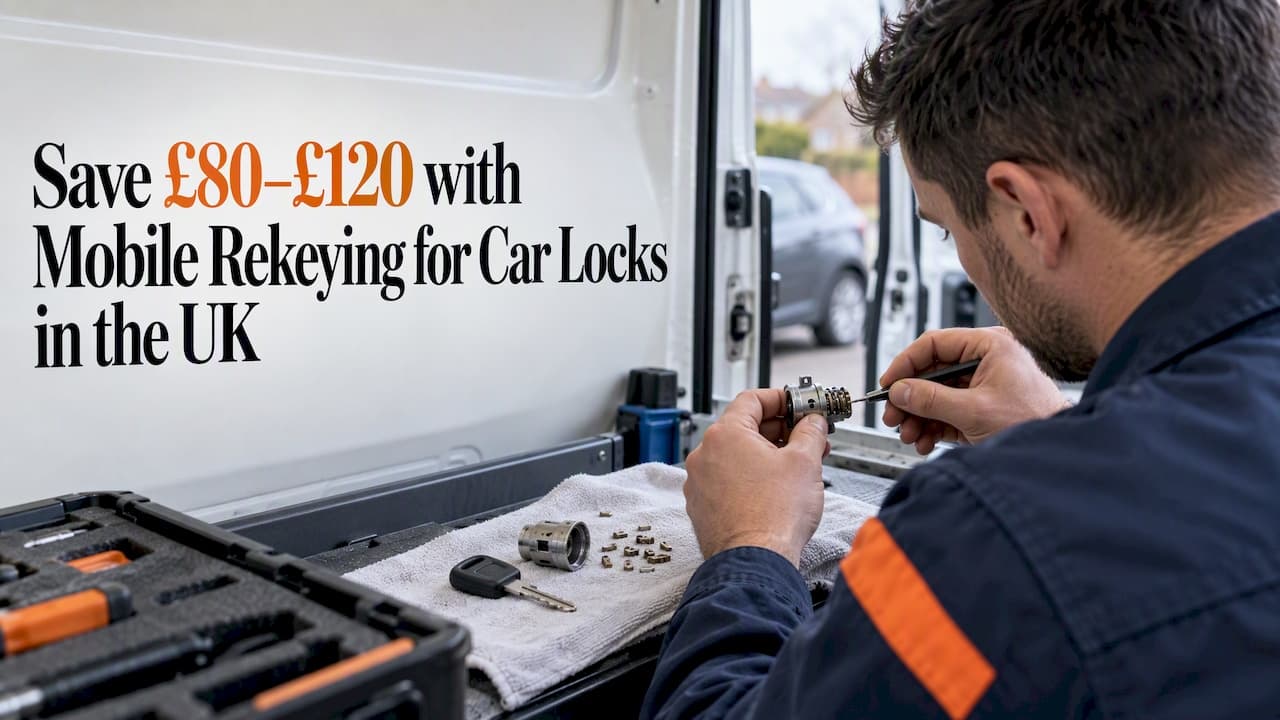
Rekeying is usually the cheaper, faster fix when you have lost a spare key but still hold at least one working key and the lock hardware is sound, typically costing less than a full lock replacement. Replacement makes more sense when a lock is damaged, when keys may have been stolen, or when the vehicle's immobiliser needs resetting. A mobile locksmith visit generally fits into a single on-site call, often within an hour of booking.
TL;DR:
- Rekeying is usually the more affordable and faster option when the lock hardware is intact and only the key needs changing, typically costing less than a full lock replacement.
- Rekeying a lock doesn't affect electronic systems or immobilisers, so damage to electronic components or the lock being seized requires full replacement instead.
- The cost of rekeying varies based on the vehicle make, model, and whether programming transponder keys or remotes is necessary, with lost-key jobs often costing £80 to £120 more.
- DIY rekeying is only feasible for older, purely mechanical locks; modern cars with electronic keys and transponder systems require professional services to avoid damage or warranty invalidation.
- Professional mobile locksmiths can usually perform rekeying and key programming on-site within 30 to 60 minutes, with transparent pricing and certified technicians ensuring reliable service.
Table of Contents
- What rekeying a car lock actually involves
- Cost, labour and timeline: what to expect
- When to choose rekeying and when to replace the lock
- Can you rekey your car yourself? DIY limits and risks
- Ignition and electronic key considerations (key fobs, transponders)
- How to choose a locksmith or mobile rekey service
- How a mobile locksmith handles rekeying on site
- When rekeying is the sensible, sustainable choice
- Auto Key Maker: mobile rekeying and key programming services
- FAQ
- Sources
What rekeying a car lock actually involves
Rekeying means changing the internal tumblers or wafers inside a lock cylinder so that old keys stop working and a new key operates it instead. The outer lock body, door handle and cylinder housing stay the same: only the small internal pins change position or shape to match a new key cut.

This differs from a full lock replacement, where the entire cylinder assembly is swapped out, and from simple wafer repair, where worn or bent internal parts are fixed without changing which key fits. Rekeying on its own usually has no effect on central locking or the immobiliser system, since those run on separate electronic components rather than the mechanical cylinder.
Rekeying is not always possible. A few situations rule it out:
- The cylinder itself is cracked, snapped or seized from corrosion.
- Internal components have been damaged by a forced entry attempt.
- The lock is integrated with electronics that require reprogramming rather than a mechanical fix.
When any of these apply, replacement becomes the practical option rather than a choice.
Cost, labour and timeline: what to expect
Rekeying a single mechanical lock typically costs less than replacing it, with Keytek's cost guidance noting that lost-key jobs often run £80 to £120 higher than a standard lockout call-out because the lock is usually replaced rather than rekeyed, to keep the vehicle secure.
Lost-key jobs often cost more than a simple lockout because locksmiths commonly recommend replacement over rekeying to close any security gap, according to Keytek's pricing notes. That single factor explains much of the price gap between a straightforward rekey and an "all keys lost" job.
Several things push the price up or down:
- Vehicle make and model, since parts availability and labour time vary widely.
- Whether a transponder key or remote fob needs programming alongside the mechanical work.
- Whether it's an "all keys lost" job, which usually means sourcing a new key from scratch.
- Emergency or out-of-hours call-outs, which carry a higher fee than a scheduled daytime visit.
A typical mobile visit breaks into three parts: the call-out and arrival, the on-site diagnostic and mechanical work, and any programming needed for electronic keys, much like the comprehensive vehicle maintenance and repair services offered by certified mechanics. Dealer-only parts or scarce stock for less common models can push replacement costs well above a standard rekey, sometimes by a significant margin once towing and dealership labour rates are added.
When to choose rekeying and when to replace the lock
The decision usually comes down to three questions: is the hardware intact, do you trust the whereabouts of every key, and does the vehicle need electronic reprogramming.
- Choose rekeying when a key is lost but the lock itself works fine and the car has no immobiliser link to that specific key.
- Choose replacement when the cylinder is broken, badly worn or corroded, since rekeying a damaged lock rarely holds up.
- Choose replacement when a key may have been stolen rather than simply misplaced, since rekeying alone cannot guarantee the lost key no longer opens anything if copies exist elsewhere.
- Consider replacement as a security upgrade on an older vehicle, moving to a higher-security cylinder rather than just reissuing the old design.
Ignition and steering-lock damage changes the calculation entirely: a damaged ignition barrel or an integrated key system usually forces a repair or replacement job rather than a simple rekey, since the mechanical and electronic parts are bound together.
Pro Tip: If you're unsure whether your key situation counts as "lost" or "possibly stolen," treat it as stolen. The small extra cost of replacement is cheaper than a theft you could have prevented.
Can you rekey your car yourself? DIY limits and risks
Mechanical DIY rekeying kits exist and can work on older cars with simple pin-tumbler locks, following the kind of stepwise instructions found in guides such as wikiHow's rekeying article, which also flags that modern vehicle systems often exceed what a DIY kit can handle. Most cars built in the last fifteen to twenty years pair the mechanical lock with a transponder chip or remote fob, and rekeying the cylinder alone does nothing to that electronic layer.
Risks worth weighing before attempting it yourself:
- Damaging the cylinder or surrounding trim, which turns a cheap job into an expensive repair.
- Voiding a manufacturer or extended warranty if you open electronic or ignition-linked components.
- Invalidating insurance cover if any required reprogramming is skipped or done incorrectly.
DIY is reasonable only on older, purely mechanical locks with no electronic key link. If your vehicle uses a transponder key, remote fob or integrated ignition system, a professional visit is the safer route.
Ignition and electronic key considerations (key fobs, transponders)
Mechanical rekeying changes the physical lock. It does nothing to a transponder chip, remote fob or the vehicle's immobiliser, which are separate electronic systems that need their own programming step.
Mobile locksmiths equipped with diagnostic vans can often perform programming work on site, cutting out the need to tow a vehicle to a dealer for electronic work. That capability matters most in "all keys lost" situations, where every key needs cutting and programming from scratch, or where a lost key needs deleting from the car's memory so it can no longer start the engine.
- Rekeying alone is insufficient whenever the immobiliser needs to recognise a new key.
- Transponder and remote programming typically adds both cost and time to a straightforward rekey job.
- Some models require dealer-only programming tools, though many mainstream makes can be handled with mobile diagnostic equipment.
- Stolen key deletion and reprogramming should be treated as a security job, not just a convenience fix.
Our key programming service covers transponder and remote programming on-site for most makes and models.
How to choose a locksmith or mobile rekey service
A few checks before booking save you from a bad experience later.
- Ask whether technicians hold recognised trade credentials, such as SERMI certification, which governs access to security-related repair information for vehicle locks.
- Confirm they carry insurance and ask what guarantee or warranty covers the completed work.
- Ask for the call-out fee and an estimated total before they arrive, including whether transponder programming is included.
- Check their expected response time and whether their van and staff carry identifiable branding or ID.
Red flags include a refusal to give any price indication, pressure to pay a deposit before full vehicle details are confirmed, or no mention of trade credentials when asked directly. You can check local reviews before booking, and on arrival it's reasonable to ask the technician to confirm their identity and the company they work for.
Pro Tip: Save the quoted total in writing, by text or e-mail, before the technician starts work. It avoids disputes if the final bill looks different.
How a mobile locksmith handles rekeying on site
A typical visit follows a consistent pattern: the technician confirms your identity and vehicle ownership, inspects the cylinder and checks whether the immobiliser is involved, then decides between rekeying and replacement based on what they find.
- Diagnostic equipment on board allows dealership-level programming without towing the vehicle to a dealer.
- Parts for common makes are usually carried as stock, cutting down on return visits.
- Several test starts and door checks are carried out before the keys are handed back.
- Paperwork or a receipt confirming the work done should be provided as standard.
Our lock and ignition repair service follows this same on-site workflow for jobs that turn out to need more than a straightforward rekey.
When rekeying is the sensible, sustainable choice
Rekeying earns its reputation as the sensible default because most lost-key situations are exactly that: lost, not stolen, with the hardware still in good condition. The job that trips people up is skipping the honest question of whether a key might be in someone else's hands. Treat that distinction seriously, lean on certified technicians for anything involving a transponder or immobiliser, and rekeying remains the practical, lower-cost choice far more often than not.
— James
Auto Key Maker: mobile rekeying and key programming services
If you need a lock rekeyed, a key programmed or you're simply locked out, our mobile vans can come to you, typically arriving within 30 to 60 minutes of booking. Technicians are licensed, insured and SERMI-certified, so transponder and remote programming can often be handled on-site without a dealer visit.

- We cover a range of services from straightforward rekeys to all-keys-lost replacements and stolen key deletion.
- Emergency call-outs are available for lockouts and ignition problems.
- Pricing is confirmed before work starts to avoid surprise charges on arrival.
Book a visit through our car lockout services page and get a technician out to you the same day in most cases.
FAQ
Can car door locks be rekeyed?
Yes, most mechanical car door locks can be rekeyed by changing the internal wafers or pins so a new key operates them. It's not possible when the cylinder is physically damaged or seized, in which case replacement is the only option.
Can I rekey my locks myself?
DIY rekeying kits can work on older cars with simple mechanical locks, but most modern vehicles pair the lock with a transponder chip or immobiliser link that a kit cannot touch. If your car uses a remote fob or electronic key system, a professional visit avoids the risk of damage or voided cover.
Does rekey mean replacing the entire lock?
No, rekeying changes only the internal tumblers so old keys stop working, while the lock body and housing stay in place. Full replacement swaps out the entire cylinder assembly and is used when the hardware itself is damaged or worn.
How much does it cost to rekey a lock cylinder?
Rekeying a single mechanical lock generally costs less than replacing it, though lost-key jobs often run £80 to £120 higher than a standard lockout because locksmiths typically recommend replacement instead, to close any security gap. The final price depends on the vehicle, whether a transponder needs programming, and whether it's an emergency call-out.
Sources
For SERMI's role in vehicle security credentials and Keytek's detailed UK cost breakdowns, see the sources below, alongside our own key programming page for practical workflow details.
- SERMI - Security-related Repair Maintenance Information
- Cost of Changing Locks 2026 | UK Locksmith Prices | Keytek